Biodiversity in our woodlands

Biodiversity in our woodlands

September is Biodiversity Month in Australia. At Glenelg Hopkins CMA, one of our key objectives is to improve protection and management of our catchment’s significant biodiversity assets through a range of programs and initiatives. These help ensure our important environments and habitats are preserved for future generations to appreciate and enjoy...

read on
Regional Pest Animal Plan

Regional Pest Animal Plan

Effective pest animal management is a key element in improving the economic, social and environmental wellbeing of the Glenelg Hopkins community. The Regional Pest Animal Plan aims to: • prevent the introduction and establishment of new high risk invasive animals in the region • reduce the impact of established invasive animals on key environm...

read on
Estuary Update

Estuary Update

Estuaries are the place where the freshwater from our catchments meet the saltwater of the sea. Glenelg Hopkins CMA collects readings and observations for the Hopkins, Merri, Yambuk, Fitzroy, Surry and Glenelg estuaries and compiles a snapshot of estuary condition. More detailed estuary profiling is conducted as well and can be seen via the link...

read on
Workshops to identify natural assets

Workshops to identify natural assets

Glenelg Hopkins Catchment Management Authority is seeking to work with interested community members and regional partners to learn about the region's most valued environmental assets...

read on
River health action in the upper Glenelg

River health action in the upper Glenelg

Landholders in the Chetwynd area are in the process of accessing fencing grants from Glenelg Hopkins CMA to protect some of the region’s most important waterways. The grants are being offered by the CMA as part of implementation of the recently completed Waterway Action Plan for the Glenelg River between Chetwynd River and Salt Creek and its trib...

read on
back
  • Flood Information

    Flood Information

    In the event of a flood or storm incident, the Glenelg Hopkins Catchment Management Authority (CMA) is providing our local communi

    read on
  • Second Gen Grants

    Second Gen Grants

    National Landcare Week will be celebrated next week, with Glenelg Hopkins CMA launching this year’s Second Generation Landcare gra

    read on
  • Grants Guide

    Grants Guide

    The latest grants and incentives guide is available from the Glenelg Hopkins CMA offices in Hamilton and Warrnambool, or available

    read on
  • Alissa loves her job

    Alissa loves her job

    Landscape Project Coordinator Alissa Rogers loves her job. The best part, according to Alissa, is the dogs she gets to meet. So m

    read on
  • Revegetation tool

    Revegetation tool

    A new resource and reference tool developed by Glenelg Hopkins Catchment Management Authority will help increase the survival and

    read on
  • Estuary Update

    Estuary Update

    Glenelg Hopkins CMA collects readings and observations for the Hopkins, Merri, Yambuk, Fitzroy, Surry and Glenelg estuaries and co

    read on
  • Climate Change

    Climate Change

    The Barwon South West Climate Change Survey was commissioned by the Barwon South West Regional Management Forum Climate Change Wor

    read on

Glenelg Hopkins CMA Victoria, Australia

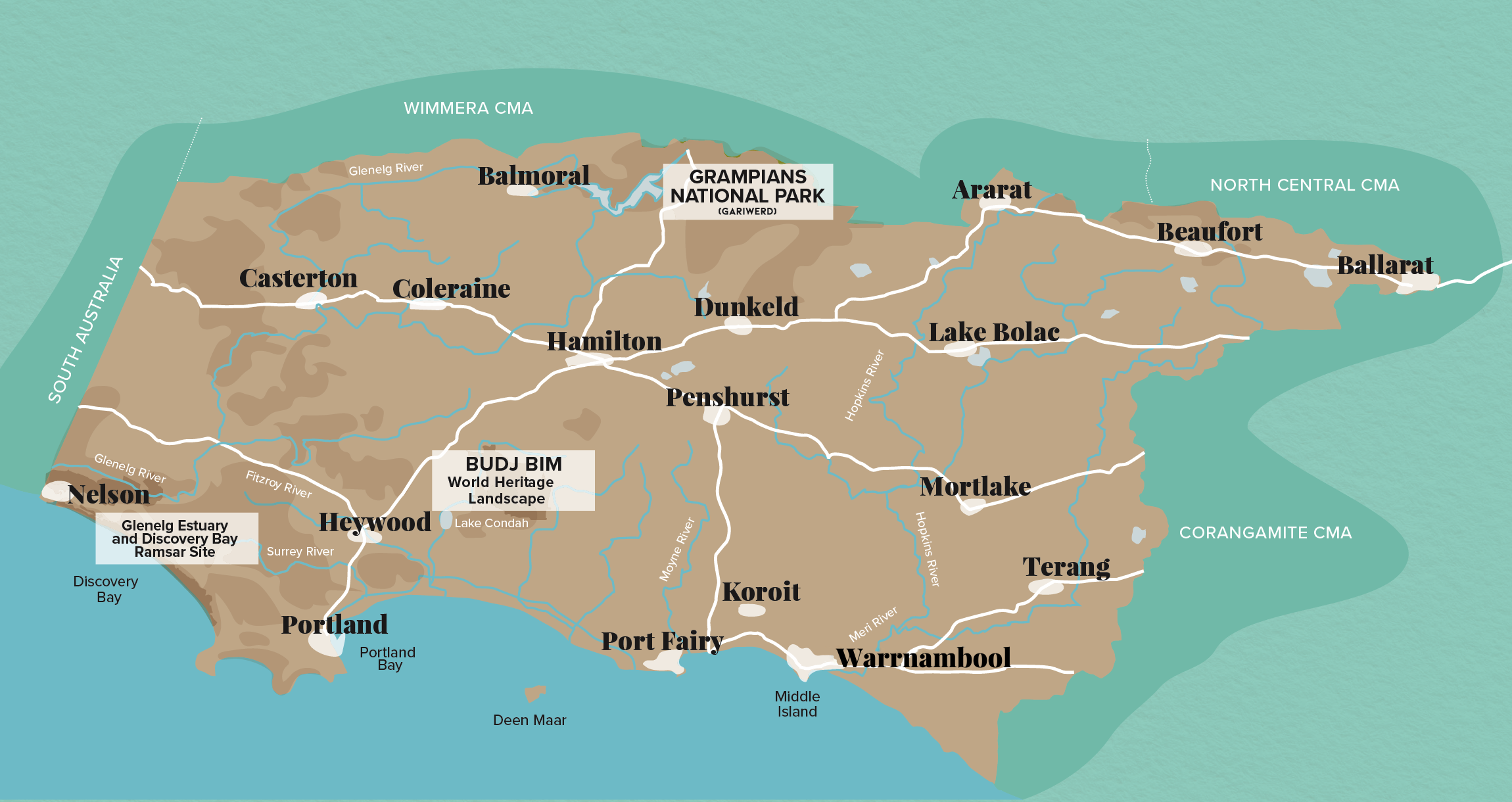
The Glenelg Hopkins Catchment encompasses the Glenelg, Hopkins and Portland Coast Basins lying south of the Great Dividing Range in south western Victoria.

The region 25,000 square kms, includes the cities and townships of Ballarat, Hamilton, Warrnambool, Ararat, Casterton, Mortlake, Port Fairy, Beaufort and Portland.

Major employment sources of agriculture, forestry and fishing provide nearly 25% of total employment. Agriculture is dominant, with forestry and fishing largely confined to the South -west coastal parts of the region.

Approximately 81% of the Glenelg Hopkins region has been developed for agricultural use. Around 2% of the catchment comprises pine forest, 16% is native forest and less than 1% is used for urban and industrial development.

The greatest impact on the region is the degradation caused by pest plant and animals, habitat loss, dryland salinity, decline in water quality of waterways and water erosion. These are many of the issues the Glenelg Hopkins CMA is trying to combat through its many programs. But it can only be done with the support of the community.