The Glenelg Hopkins Catchment Management Authority protects and enhances the land, water and biodiversity across 26,910 sq km of Victoria’s South-West.
This project will improve the trajectory of the critically endangered Glenelg Freshwater Mussel through habitat improvement and captive breeding programs. Project name: Building (Glenelg Freshwater) Mussels Project funding: $490,000 over two years (2024-2025) Funding source: The Australian Government’s Saving Native Species Program
PROJECT UPDATES
PROJECT LAUNCH: May 2024
We are Musseling up the Glenelg River!
A new $490,000 two-year project funded through the Australian Government’s Saving Native Species program will see the Glenelg Freshwater Mussel’s environment improved locally through on-ground works and actions and a captive breeding program undertaken.
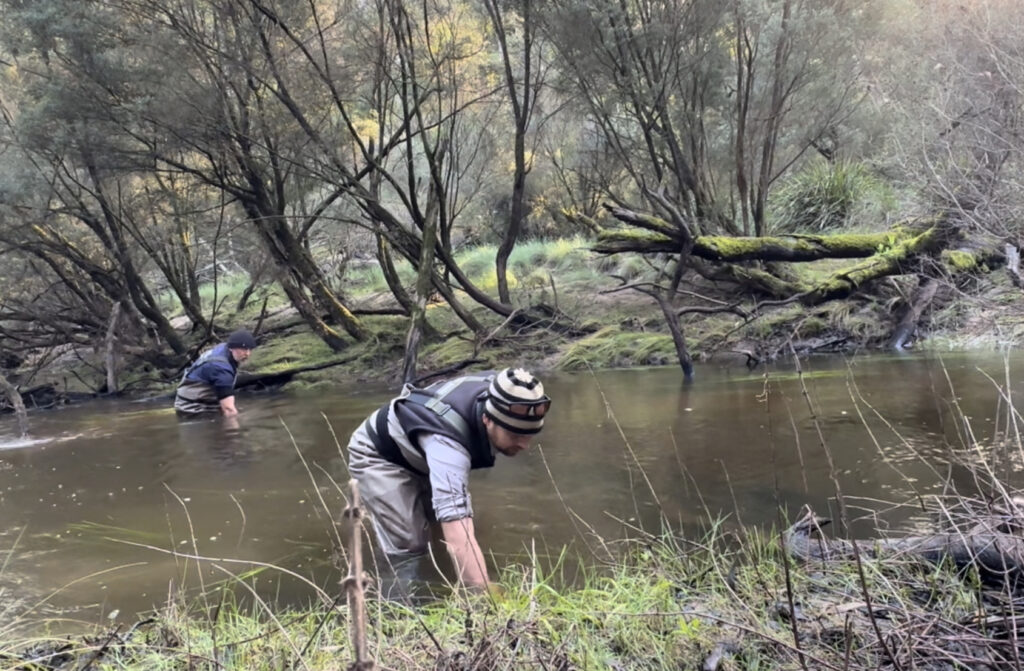
MEDIA RELEASE 8 May 2024 BUILDING MUSSELS IN THE GLENELG RIVER A new project to improve the habitat and numbers of one of Australia’s most critically endangered molluscs, the Glenelg Freshwater Mussel only found in south-west Victoria, has been announced as part of Australian Government investment for threatened species. Last week, the Federal Minister for the Environment and Water, Tanya Plibersek MP, announced more than $1.2 million to save threatened fish – the Stocky galaxias (found in NSW) and Swan galaxias (found in Tasmania), and the Glenelg Freshwater Mussel. The Glenelg Freshwater Mussel is a critically endangered mussel species found only in the Glenelg River system of south-western Victoria. The species is culturally significant for the region’s Gunditjmara Traditional Owners and is at risk from genetic in-breeding, habitat degradation and extreme events like fire and drought. The two-year, $490,000 project will focus on works in the Glenelg River around Dartmoor and will be delivered by the Glenelg Hopkins Catchment Management Authority (CMA). “The Glenelg Freshwater Mussel is a species only found in our catchment, and only in the tributaries of the Glenelg River, so it is fantastic to have this significant Australian Government investment in the species which is so special to our area,” Glenelg Hopkins CMA CEO, Adam Bester, said. Funding for the project supports captive breeding programs, the development of emergency response plans, woody weed control, revegetation along riverbanks, and will also benefit other threatened species that share the same habitat. The project brings together the combined expertise of Glenelg Hopkins CMA, the Arthur Rylah Institute for Environmental Research (ARI), Victorian Fisheries Authority (VFA) and Gunditj Mirring Traditional Owners Aboriginal Corporation (GMTOAC) and builds on the Glenelg Freshwater Mussel protection and recovery post Crawford River fire project during which mussels were collected, kept in captivity by ARI scientists, and then returned to the waterways once the impacts of the 2021 bushfires had subsided. The new funding was announced as part of the Australian Government’s $500 million investment to protect and recover threatened species, tackle invasive species, and safeguard Australia’s natural treasures. Of this investment, $210,000 has been injected into the Snobs Creek Conservation Hatchery in Eildon, Victoria, which has already taken important and proactive steps to recover threatened freshwater species, including the Glenelg Freshwater Mussel, through captive breeding and translocations. This project received grant funding from the Australian Government Saving Native Species Program.
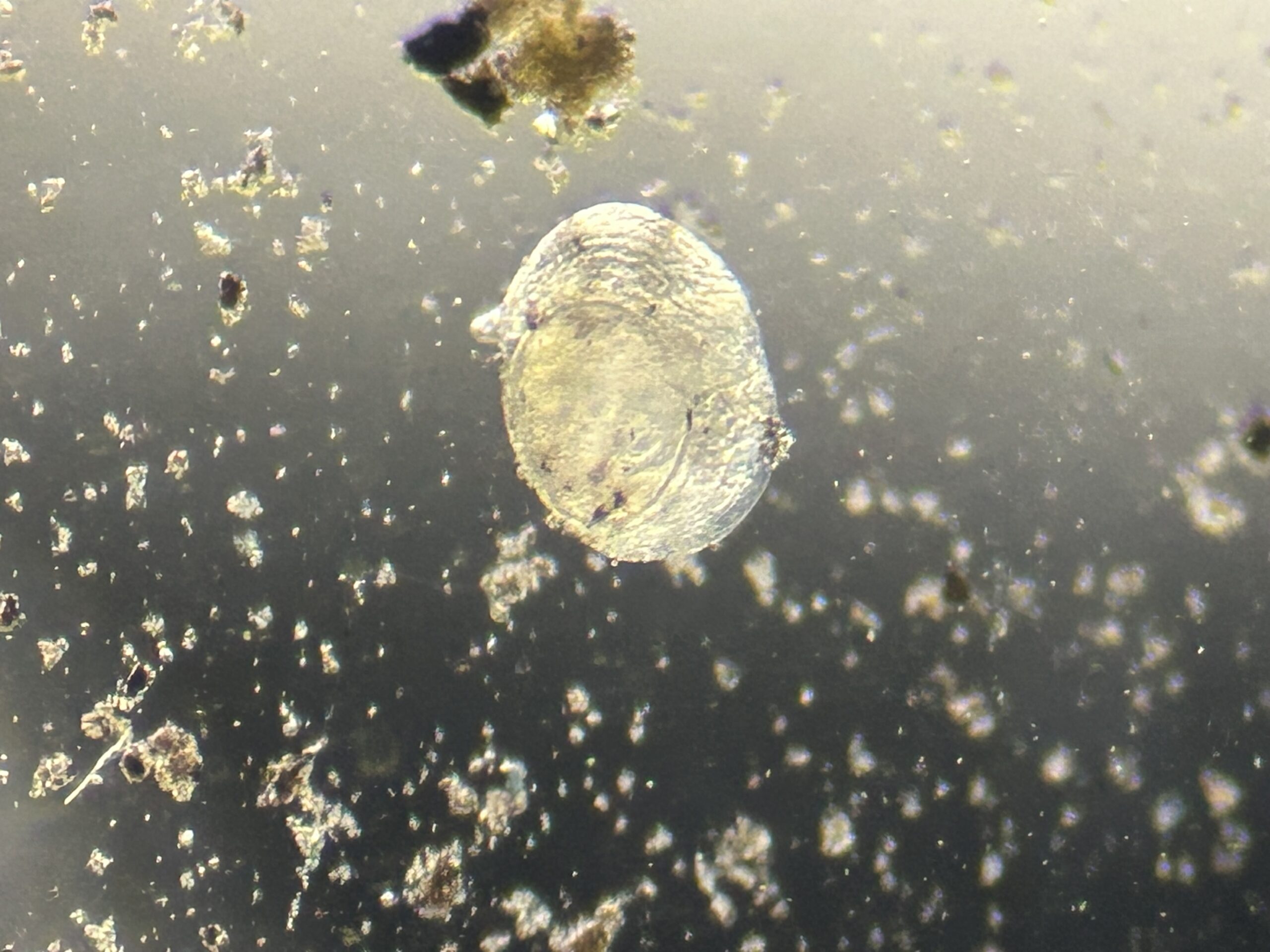
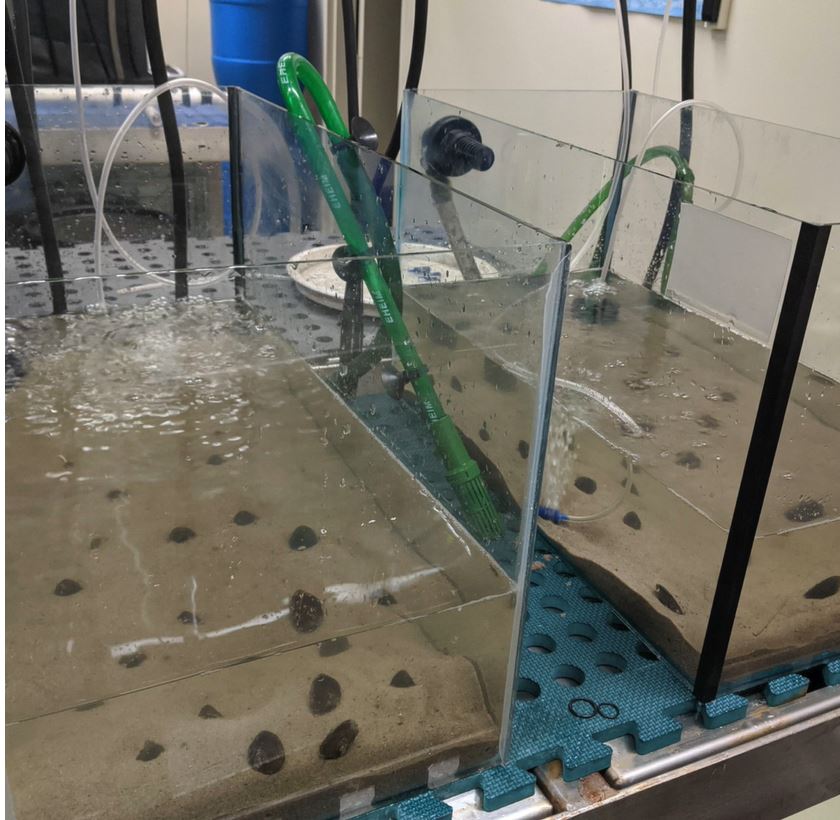
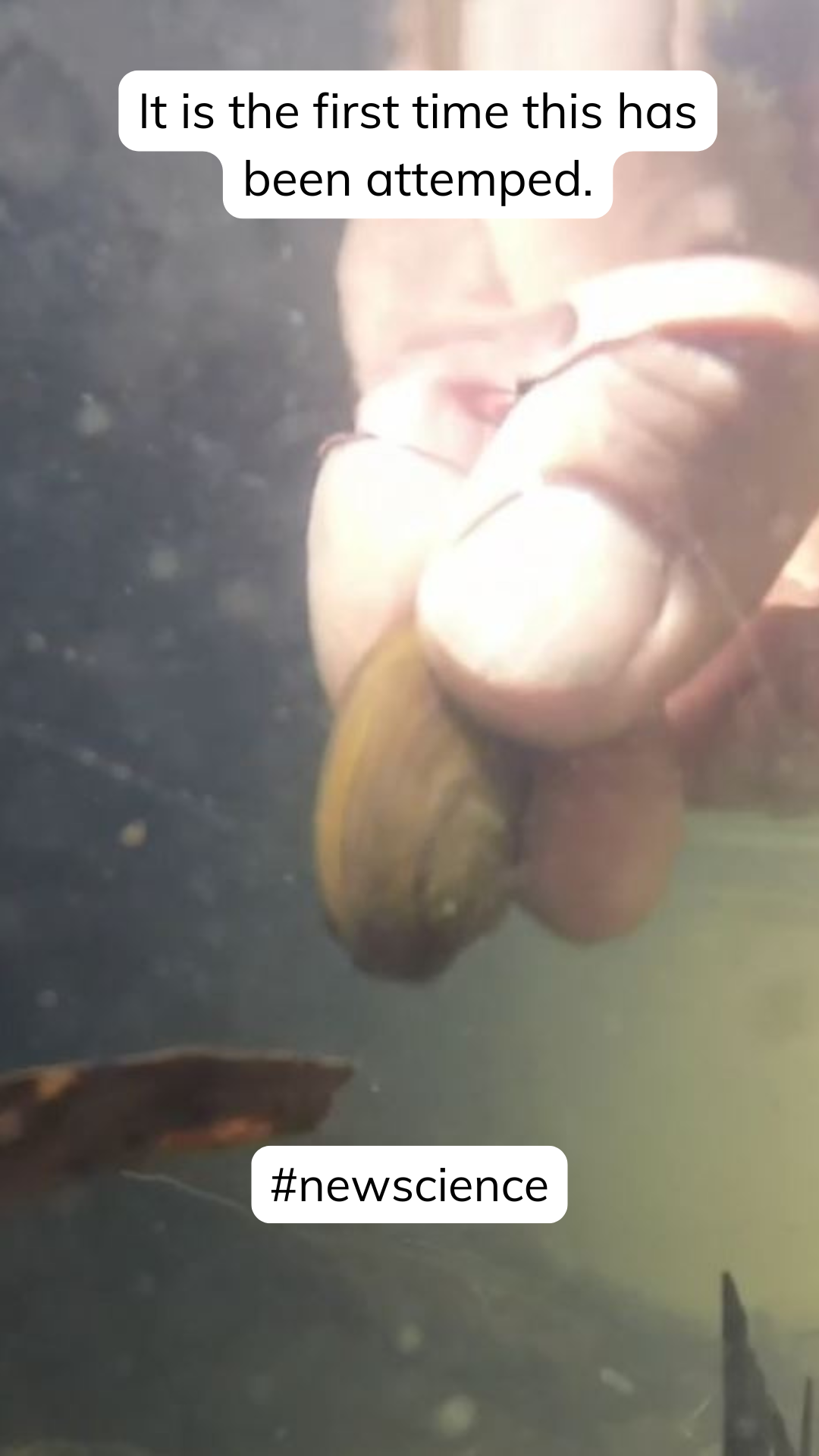
This is Daryl – the biggest of the baby mussels spawned and growing as part of the first captive breeding program for the critically endangered Glenelg Freshwater Mussel.
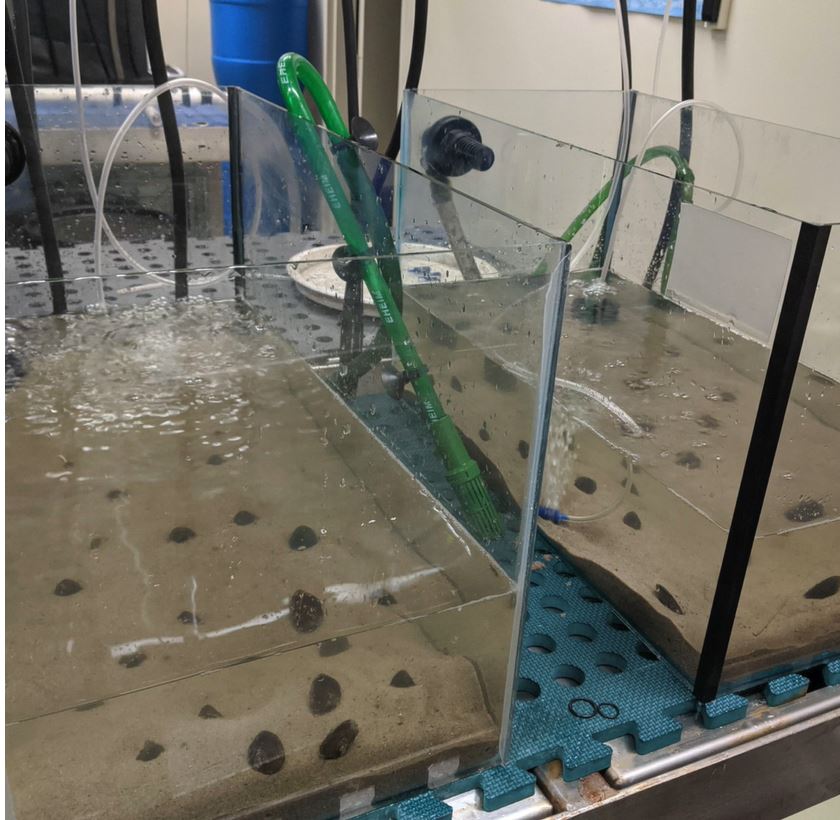
September 2025 update: The team at the VFA’s Snob’s Creek Conservation Hatchery have been a bit baffled by the Glenelg Freshwater mussels and had been manipulating the temperatures and to get them to produce glochidia – the strands which expel the baby mussels into the water. They had success early on, but hadn’t been able to get the mussels to provide glochidia again. From the first sets of infestations the team collected a little over 100 viable mussels. These have been divided up into small cohorts based of the day they dropped off but currently are only around 0.4- 0.3mm (smaller than a grain of sand!) so almost impossible to count and track. Four weeks in, though, and they are continuing to find viable juvenile mussels that have full bellies and are growing – like Daryl!
The VFA conservation team has also undertaken a range of different ‘infestation’ trials to see if they can nail a perfect species/infection rate to maximise output of viable baby mussels (that have successfully attached to fish fins and remained alive), utilising both small bodied fish and now a few larger juvenile Murray cod (20cm).
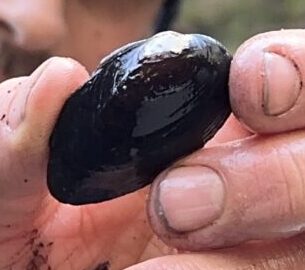
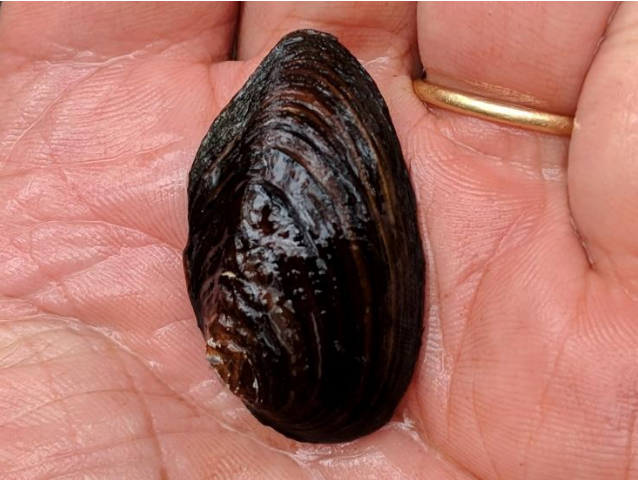
The Glenelg Freshwater Mussel (Hyridella glenelgensis) is a small, fragile, almond-shaped native bivalve known only from the Glenelg River system in south-western Victoria.
The Glenelg Freshwater Mussel (GFW Mussel) is listed as Critically Endangered under the National EPBC Act 1999 and FFG Act 1988, because of its severe decline in abundance and distribution. It is also listed as a priority species under the Threatened Species Action Plan.
he Glenelg Freshwater Mussel (Hyridella glenelgensis) is a small, fragile, almond-shaped native bivalve known only from the Glenelg River system in south-western Victoria. The Glenelg Freshwater Mussel (GFW Mussel) is listed as Critically Endangered under the National EPBC Act 1999 and FFG Act 1988, because of its severe decline in abundance and distribution. It is also listed as a priority species under the Threatened Species Action Plan.
There are currently four known populations, each small and isolated. Permanent flow, good water quality, a sandy substrate and dense riparian vegetation are important features of mussel habitat. The combination of restricted geographic distribution and specific habitat requirements make the Glenelg Freshwater Mussel particularly susceptible to extinction. Threats to the Glenelg Freshwater Mussel include siltation, loss of riparian vegetation through livestock trampling and grazing, poor water quality due to salinity and pesticides, low flows and cessations in flow, introduced common carp (Cyprinus carpio), loss of native fish hosts for parasitic mussel larvae, bushfires and impacts of future timber harvesting.
Glenelg Hopkins CMA will lead a project to address the current decline and threats to the Glenelg Freshwater Mussel through practical actions drawn from the Approved Conservation Advice.
These actions combine identification of strategic habitat, targeted threat abatement for improved riparian management, and the establishment of a population of GFW Mussels in captivity at the Snobs Creek hatchery to support the species through catastrophic events.
The project brings together the combined expertise of Glenelg Hopkins CMA, the Arthur Rylah Institute for Environmental Research (ARI), Victorian Fisheries Authority (VFA) and Gunditj Mirring Traditional Owners Aboriginal Corporation (GMTOAC).
Plantation companies will undertake targeted on-ground works along strategic riparian zones.
Community engagement activities will target the local community around Dartmoor.
This project builds on the Glenelg Freshwater Mussel protection and recovery post Crawford River fire project (GA-2000746), funded through the Australian Government’s Bushfire Wildlife and Habitat Recovery Program.
Key project Activities
Habitat improvement:
By December 2025, 10 ha of riparian habitat will be improved along 1 km of waterway, protecting strategic locations for wild populations and future translocations of the GFW Mussel. Additionally, landholders will offered incentives to fence off stock access to the waterway.
This contributes to the long-term outcome: By 2035, 80% of strategic habitat improved along 20 km of waterway, protecting wild and translocated GFW Mussel populations.
Habitat protection will be achieved through three phases: inception, landholder engagement and implementation.
Captive breeding:
By December 2025, an insurance population GFW Mussels is established at the VFA Snobs Creek hatchery, which is producing progeny for release (translocation).
This contributes to the long-term outcome: By 2035, three new genetically healthy and reproducing populations of GFW Mussels are established in the wild from stocking progeny produced by the captive breeding program. The GFW Mussel has a high risk of extinction by stochastic events such as fire, sedimentation, floods, drought and predation. It is also at risk of genetic decline and loss of evolutionary adaptability through inbreeding. The captive breeding program is designed to secure an insurance population in case of catastrophic events, and to build up a genetically healthy population.
Community Awareness:
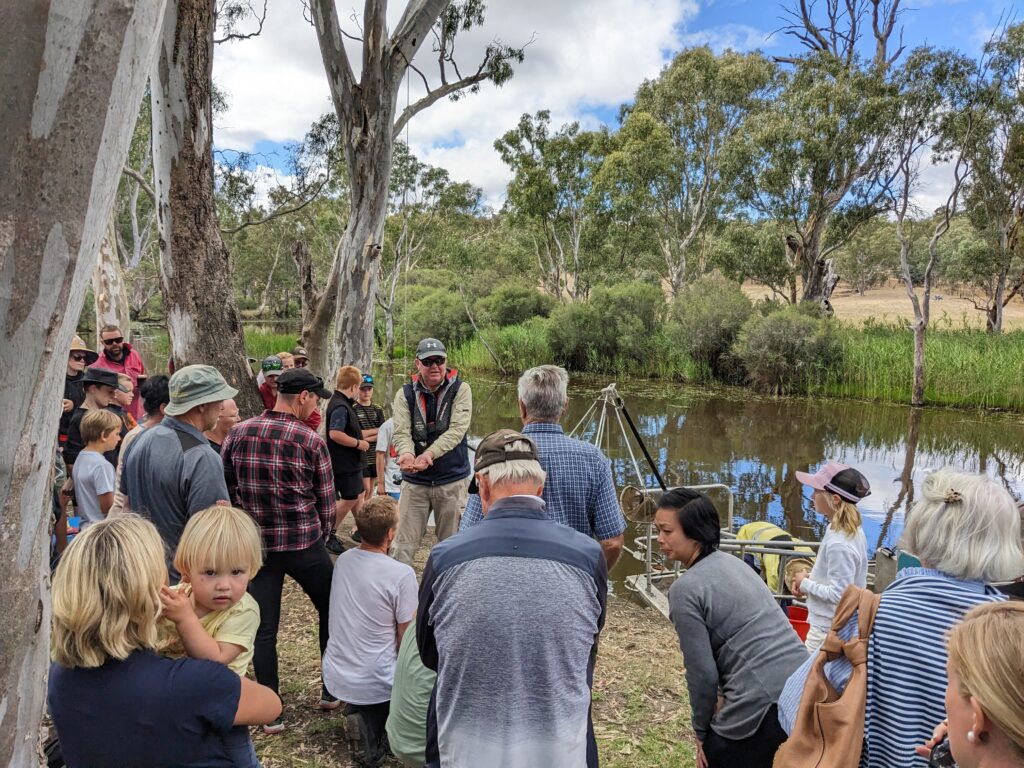
By the end of the project (December 2025) community members will have have engaged with a GFW Mussel activity, including an interactive event, for community members to encounter the mussel in a safe environment, learn about what they can do to help protect its habitat and how this benefits the Glenelg River environment.
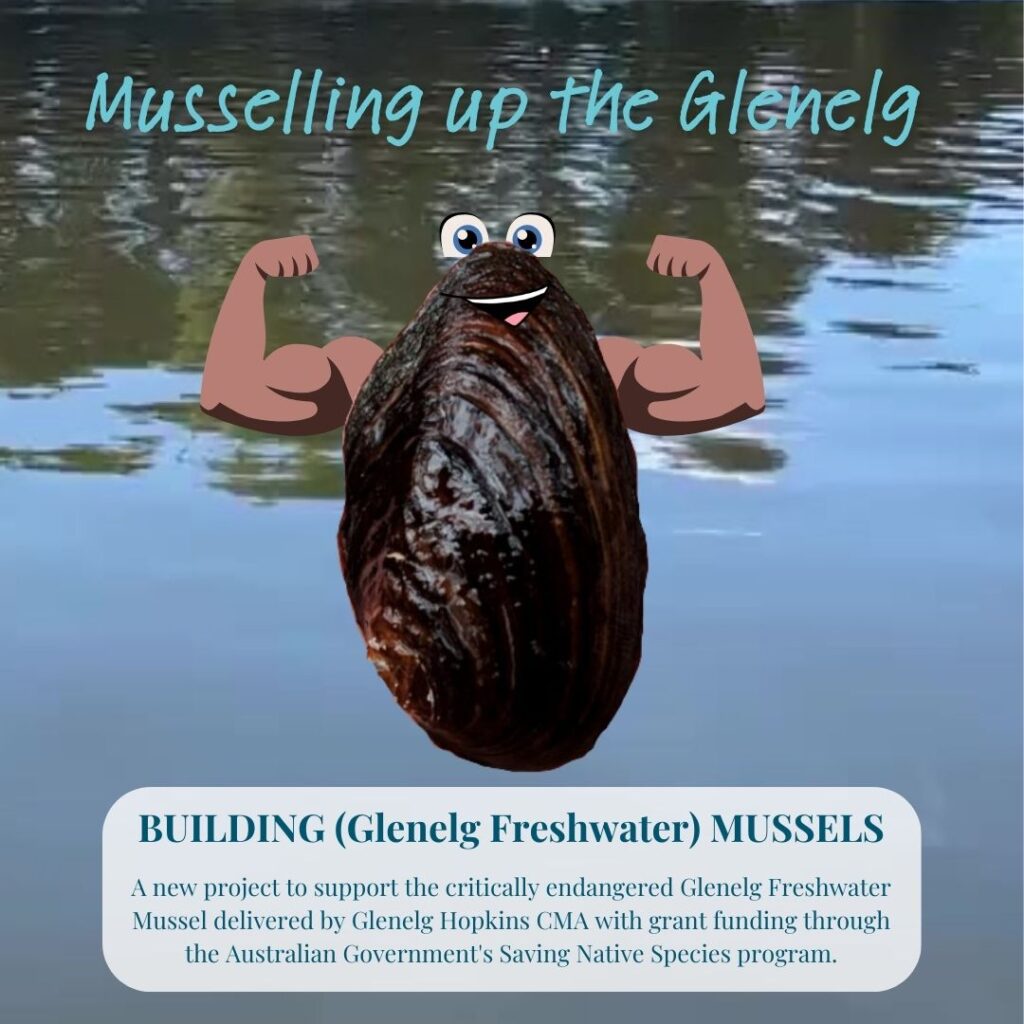
Meet The GFM – our project mascot!
The Glenelg Freshwater Mussel might seem like a sedentary mollusc but it is far from it!
Meet The GFM – it’s our project mascot who will be used to promote our project relating to the Glenelg Freshwater Mussel.
We think musselling up the Glenelg River gives us every reason to create a muscled-up Mussel!
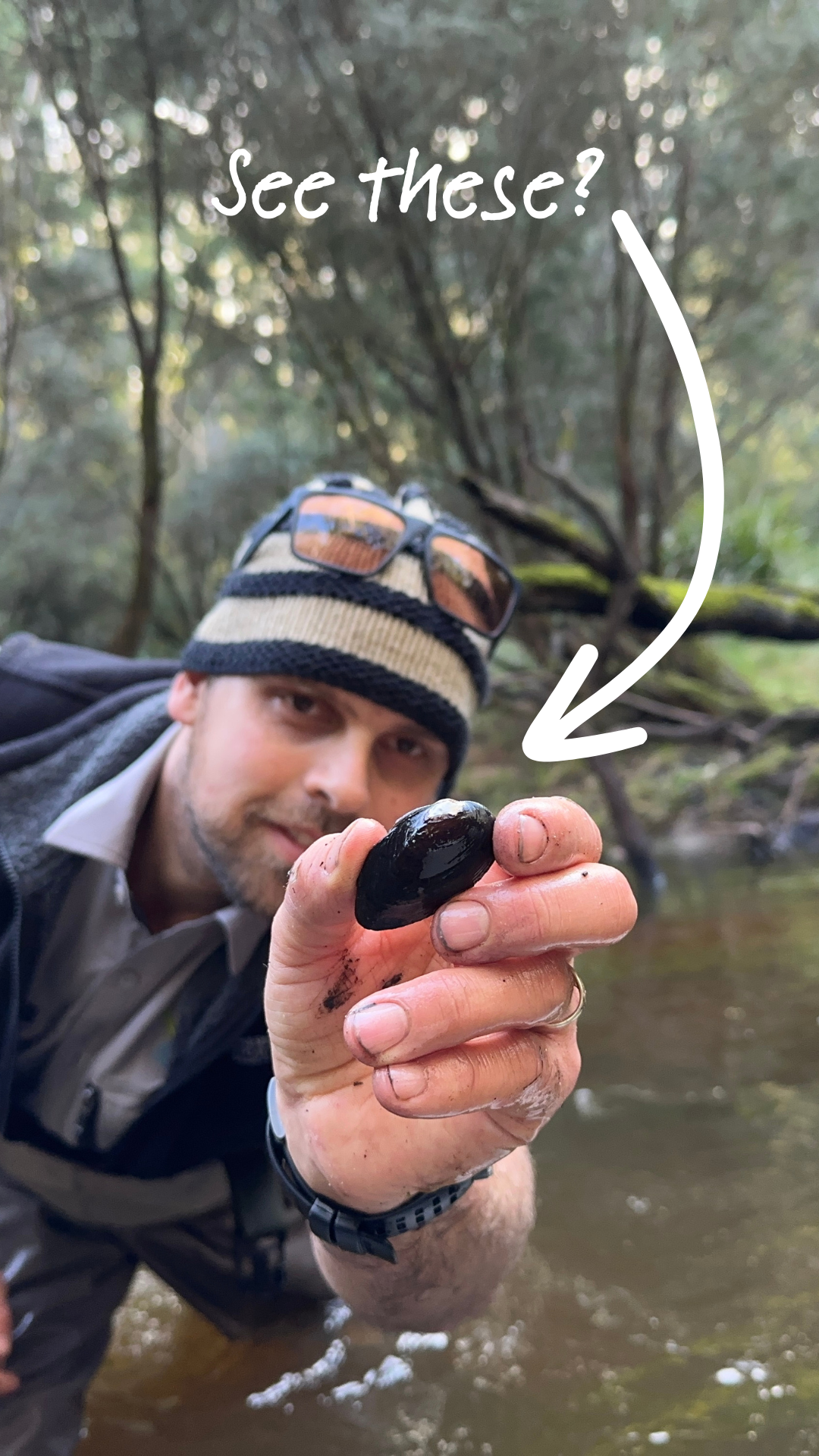
One Mussel Minute with Tarmo
Click on the image to see the Arthur Rylah Insitute’s Tarmo Raadik explain the Glenelg Freshwater Mussel’s plight, how they are found and what the plan is for a captive breeding program.
Project update videos – follow the journey of the mussel recovery
This project is supported with grant funding through the Australian Government’s Saving Native Species Program.